

Food Noise, Food Comas, & Food Hangovers
Your holiday guide to staying steady before, during, and after all that festive eating.

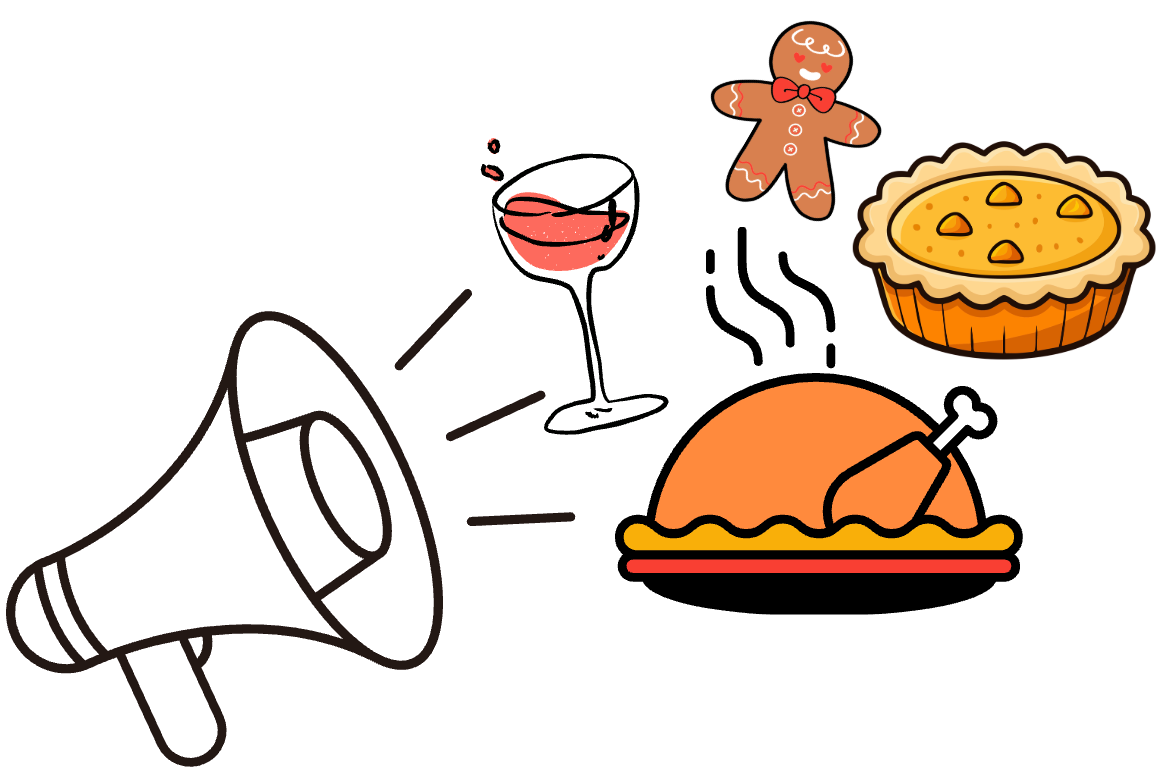
Ok folks — the holiday season officially kicks off this week. I love this stretch of the year, but it also brings a perfect storm of triggers that make us think about food a lot. And with “food noise” suddenly everywhere, it’s worth talking about how it shows up — and how it can lead to the food coma… and sometimes the food hangover.
But each of these can also happen on its own, and none of them means you’ve done anything wrong. This is just your biology responding to bigger meals, richer dishes, more emotions, and a very full calendar.
Before we dive into the most delicious six weeks of the year, let’s walk through what’s actually going on inside your body — and how to support yourself through it.
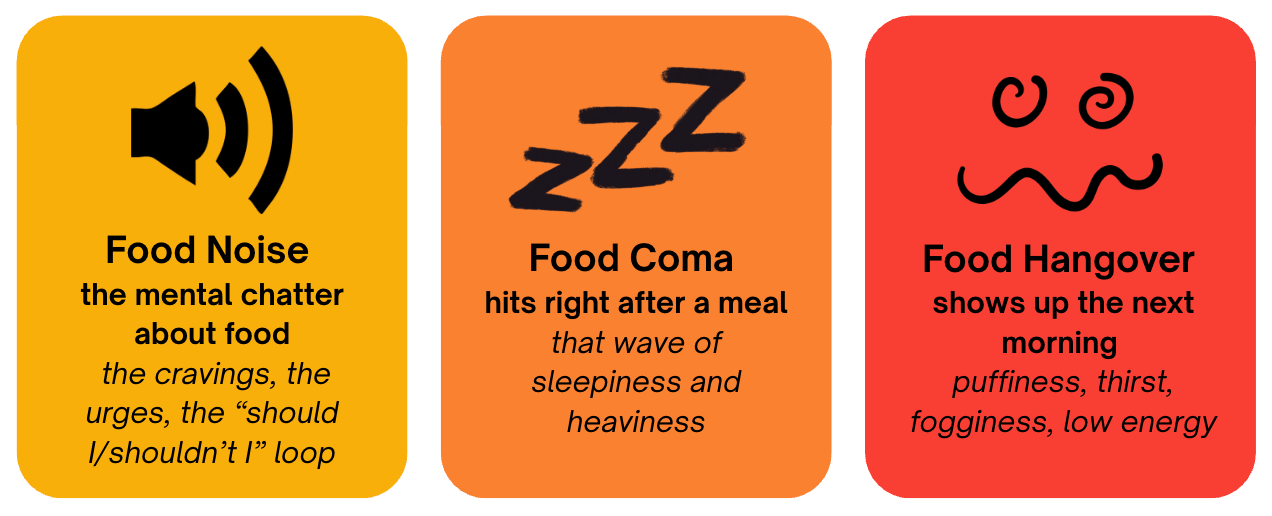

Yes, I’ve heard about food noise. What exactly is it?
Food noise is the mental chatter about food — the cravings, the urges, the negotiating, the “should I/shouldn’t I,” the low-level hum of thoughts that pull your attention toward eating even when you’re not truly hungry.
It’s like background music that’s just loud enough to keep you slightly distracted: What’s in the kitchen? Should I have a bite? Everyone else is eating… maybe I’m hungry?
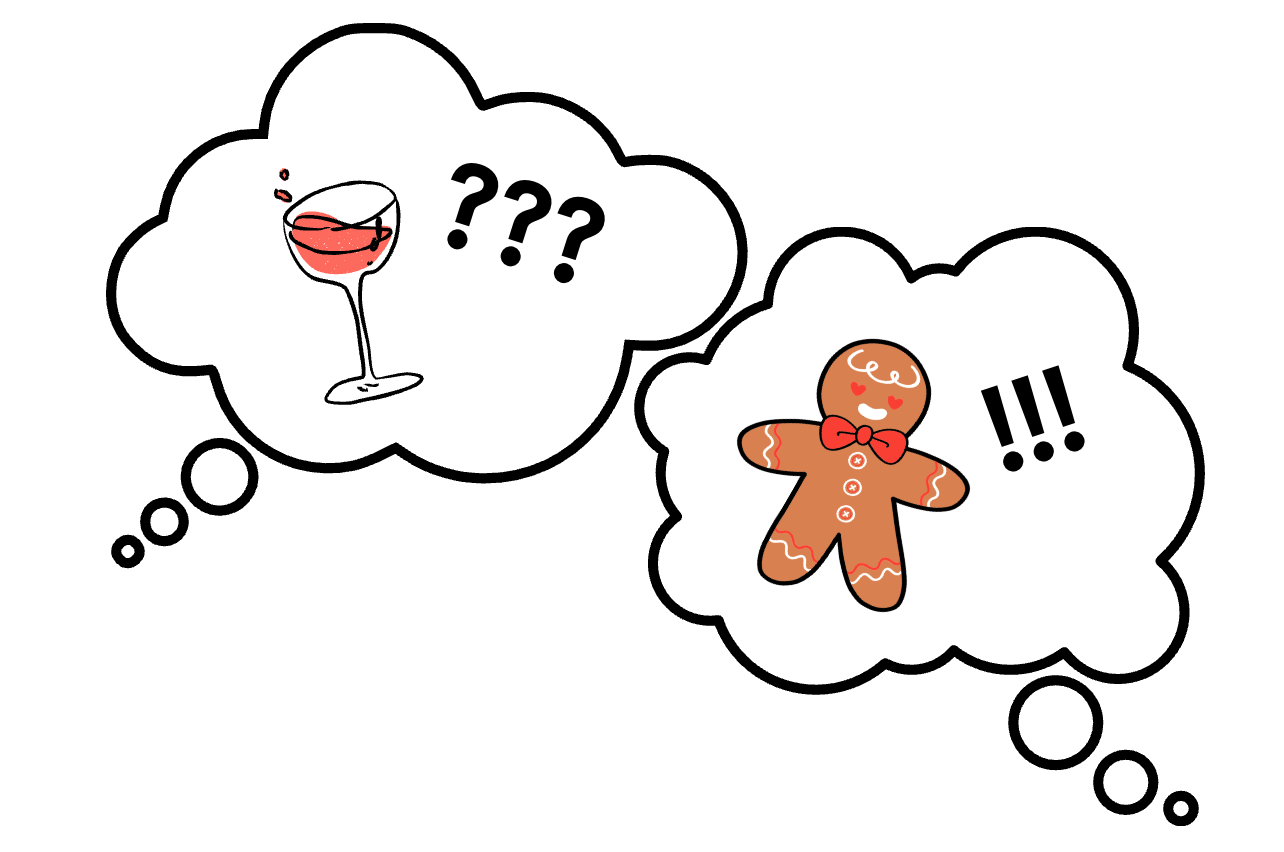
And during the holidays, that soundtrack reliably gets cranked up — not because you’re undisciplined, but because the environment is stacked against you:
your routine is off
sleep takes a hit
alcohol flows more freely
emotions run higher
every surface holds something salty, sweet, or nostalgic
food cues surround you all day
In other words, your brain is simply reacting to its environment.

Ugh. Sounds familiar. Am I doomed?
No — truly. You just need a few small levers that steady your physiology before your brain spirals into a willpower narrative.
Here’s what helps quiet the noise:
Don’t show up starving. A small protein-fiber snack keeps you steady.
Build your first plate with intention. Fiber + protein + something you love.
Pause before seconds. Fullness cues lag a few minutes behind.
Choose what you actually want. Not what everyone else is eating.
Be mindful of alcohol. It turns food noise into a megaphone.
These aren’t rules — they’re tools. And they make eating feel calmer and more intentional.

So let’s say I eat more than usual… why do I feel like I’m ready to pass out afterward?
Welcome to the food coma — or, in science-speak, postprandial somnolence.
It’s not a slow metabolism.
It’s your body handling a bigger workload than usual.
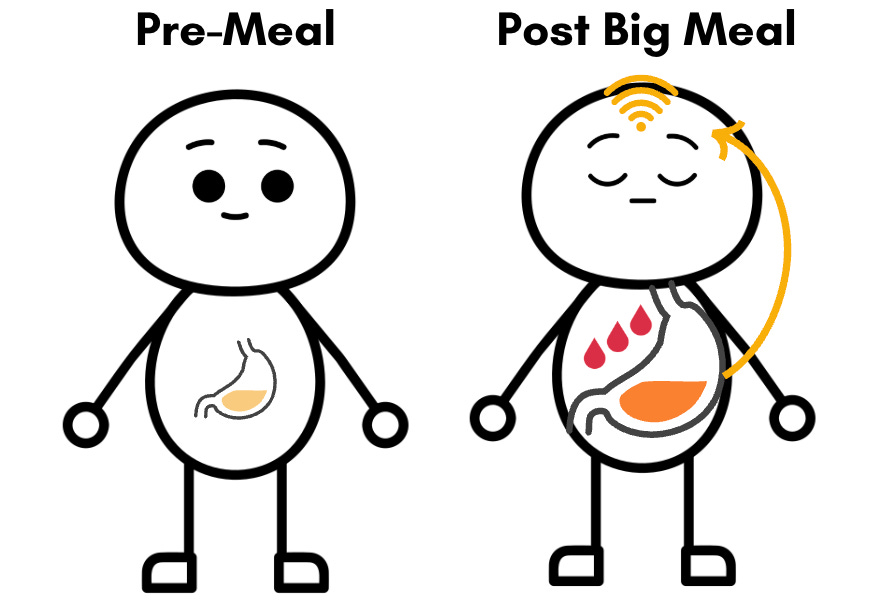
Here’s what’s happening:
Your stomach expands (up to 15× its resting size), signaling “rest-and-digest.”
Blood flow shifts toward digestion as energy gets redistributed.
Glucose spikes, then dips, creating that eyelid-heaviness crash.
Fat slows digestion, so heaviness lingers.
Gut hormones say, “Please rest now.”
Think of it like asking the lunch shift to cover lunch, happy hour, and dinner — without a single extra set of hands.
A food coma is your body asking for a timeout.

And then why do I wake up the next morning feeling puffy, thirsty, foggy, and vaguely betrayed by my own body?
That’s the food hangover — the sequel no one asked for.
It’s the mix of puffiness, thirst, fogginess, sluggish digestion, and low energy that shows up hours after a big or rich meal. It’s physiology tying up loose ends.
Behind the scenes:
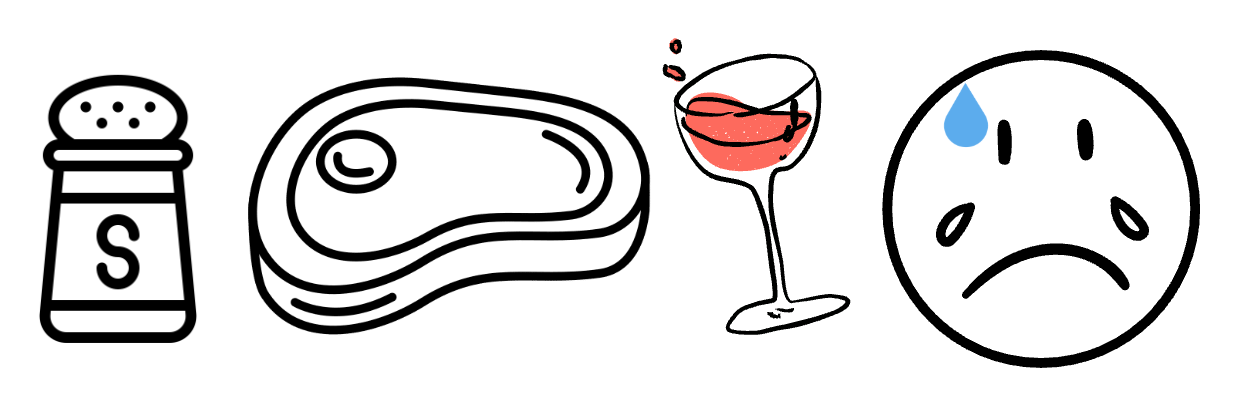
Sodium pulls water into tissues → puffiness + thirst
Heavy meals digest slowly → your body works while you sleep
Alcohol magnifies everything → dehydration + lousy sleep
Sleep quality tanks when you go to bed too full
A food hangover is just your body clearing the backlog.

Knowing myself, at some point this holiday season, I’ll end up with a food hangover. What should I do then?
First, take a breath.
A food hangover is annoying, but short-lived. You don’t need to detox, repent, or start your day with a green juice you secretly resent.
Here’s what actually helps most:
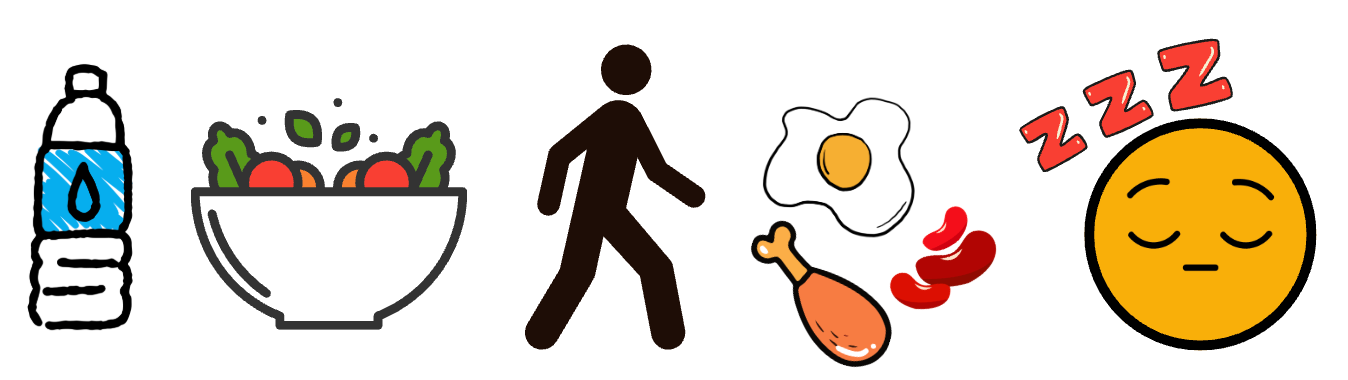
Rehydrate. Water, seltzer, or herbal tea.
Eat something light + fiber-rich. Fruit, veggies, whole grains.
Move gently. A walk or stretch resets circulation and digestion.
Make your next real meal protein-forward. It stabilizes blood sugar.
Don’t restrict. Skipping meals magnifies cravings, fatigue, and food noise.
Get good sleep that night. It’s the true reset button.

Food noise, food comas, and food hangovers aren’t moral failures — they’re physiology. Enjoy the feast, understand what’s happening in your body, and give your system a little backup.
Thank you so much for reading. Please consider hitting the heart 🤍 button below (it helps others find the post) &/or forward to a friend (or two, or three).
🗣 Got a question or comment? Leave it below so I can get back to you.
📩 Explore past newsletters and subscribe to new ones here on Substack.
A perfect storm indeed! Enjoy the holidays and eat / drink responsibly you all.