



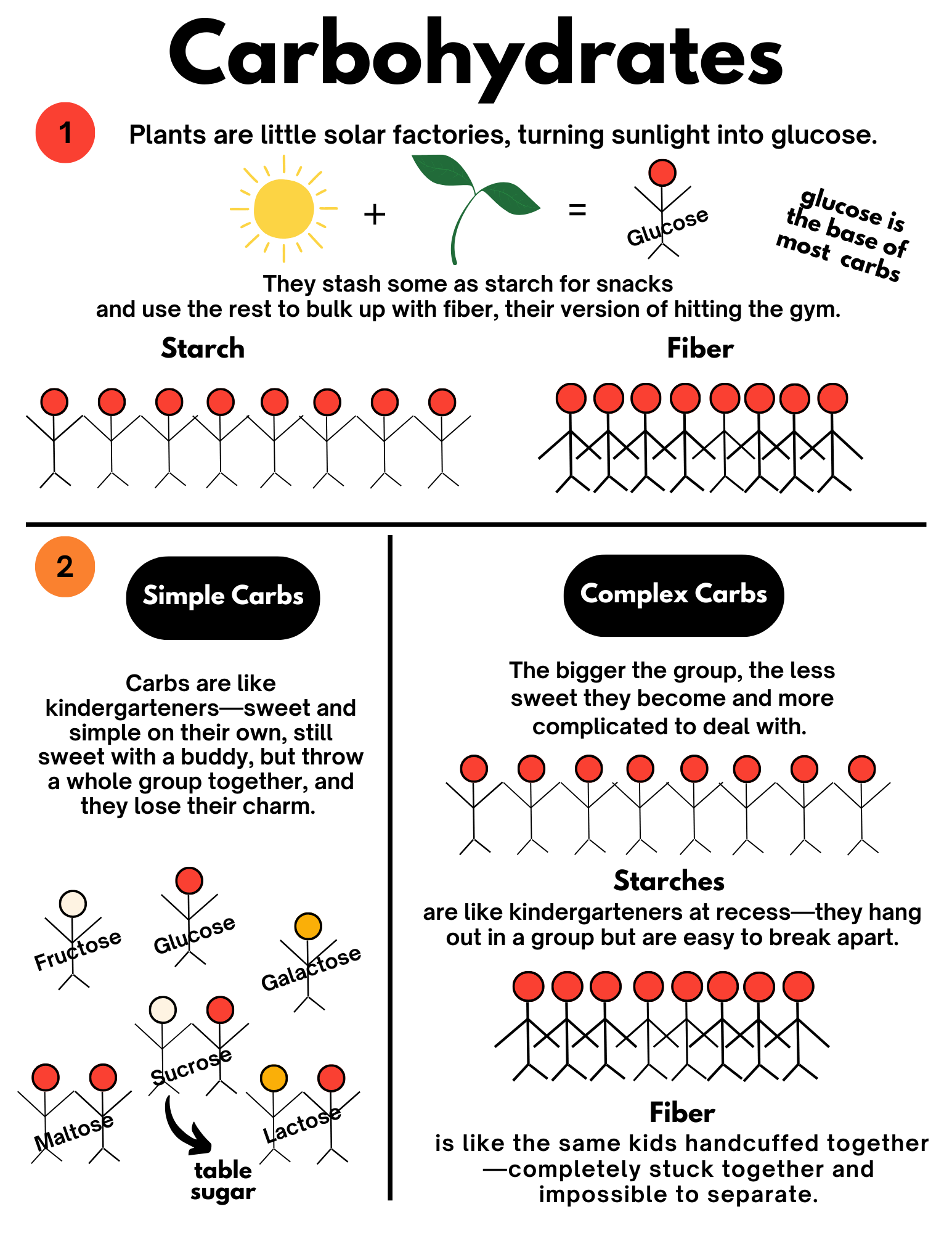
Plants: Nature’s Solar Factories
Carbohydrates are like nature’s edible energy bars, and plants are the master chefs behind them. The vegetation takes sunlight, mixes it with water and carbon dioxide (the process is called photosynthesis), and whips up glucose —a simple sugar that is the building block for most carbs. Think of glucose as the base ingredient that plants stockpile as starch for quick energy or bulk up as fiber for structure, much like humans hitting the gym for gains.
Simple vs. Complex: The Carb Spectrum
Carbs come in two main flavors: simple and complex. Simple carbs are the kindergarteners of the carb world—sweet, uncomplicated, and always up for a quick sugar rush. They include single sugars like glucose, fructose, and galactose, as well as duos like sucrose (table sugar), lactose (found in milk), and maltose. When these sugars group together, their charm fades, and their complexity rises.
On the flip side, complex carbs are more like a tightly-knit team of friends. Starches, for instance, are just long chains of glucose molecules hanging out like kids at recess—easy to break apart when energy is needed. Fiber, however, is the overachiever in the group. It’s a bunch of glucose molecules so tightly bonded that our digestive system simply can’t break it down. Fiber’s strength means it passes through us intact, keeping things moving and promoting gut health.
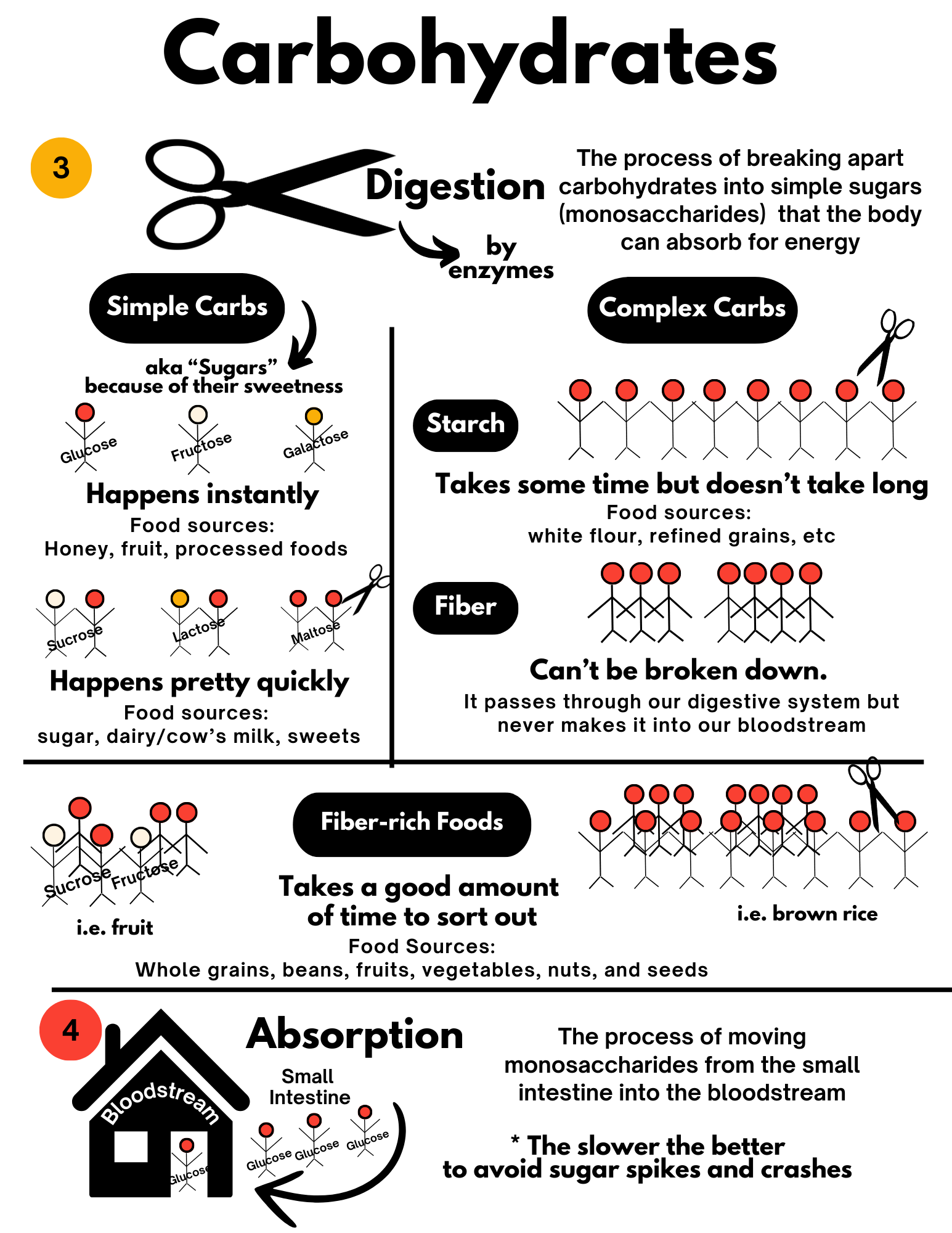
Digestion: Breaking It All Down
Your body has a simple goal for carbs: break them down into their simplest form (monosaccharides/simple sugars) so they can be absorbed for energy. Think of digestion like a road trip—each type of carbohydrate takes a different route to the same destination: your bloodstream.
Simple carbs are like quick-start matches—ready to ignite almost immediately. They’re the express lanes of digestion, zooming through with no stops. Foods like honey and sweets release their sugars quickly, giving you an energy spike.
Complex carbs, like starches, are the pit stops of digestion—a bit slower than simple carbs but still quick enough to get you back on the road. They are long chains of glucose molecules, easily broken down by enzymes into usable energy. Foods like white bread and refined grains don’t linger too long, providing a steady yet relatively fast energy release.
Fiber, on the other hand, is the ultimate traffic jam. No matter how many enzymes come to the rescue, fiber won’t budge. It’s the roadblock that makes your digestive system stronger and more resilient, like a workout for your gut.
Fiber-rich foods, like fruit and whole grains such as brown rice, bring a different dynamic—they create a full-on construction zone. The fiber tangles up digestion, slowing the entire process to a crawl. This extended timeline ensures sugar enters the bloodstream at a snail’s pace, preventing energy spikes and crashes while keeping you fueled for the long haul.
Absorption: Sugar’s Final Destination
Once broken down into monosaccharides, the sugars make their way into your bloodstream via the small intestine. Here’s the twist: slower absorption is better. A gradual release of sugar helps you avoid the dreaded sugar spikes and crashes. If proteins or fats hitch a ride with your carbs—like in a peanut butter and banana sandwich or avocado on whole-grain toast—the process slows down even further. These extra passengers force your digestive system to take its time, spreading out sugar absorption more evenly.
Fiber-rich foods like whole grains, beans, and vegetables are the VIPs of this process. They are the ultimate traffic jam, turning everything into a tangled mess that makes enzymes work overtime. This deliberate pace ensures your energy levels stay steady, keeping your body fueled without the sugar rollercoaster.
The Takeaway
Carbohydrates are your body’s go-to fuel source because they are the easiest macronutrients to convert into energy. Once broken down into glucose, they provide the preferred energy supply for your brain and muscles, making them essential for both everyday function and physical performance. Whether it’s the quick boost of simple carbs, the steady energy of starches, or the digestive benefits of fiber-rich foods, you’re setting yourself up for sustained energy and better health. Fuel wisely, and your body will thank you.