

Does Bone Broth Live Up to the Buzz?
A closer look at what’s simmering inside, and how it really compares to your everyday broth.

If you’ve ever wondered whether bone broth is actually special or just soup with a better PR team, you’re not alone. Students ask me about it. Clients ask me about it. Friends text me mid–Whole Foods run to see if they should splurge on the grass-fed version.
Meanwhile, I’m at the NYU Food Lab stuffing yet another bag of chicken bones into the freezer, promising myself that this will be the week I finally make bone broth. But here’s the thing: it takes time—lots of it. And between teaching, writing, and life… it never actually happens.
Bone broth has had quite the moment. At upwards of $10 for a to-go cup, what was once the quiet background player in your grandma’s soup pot is now splashed across wellness blogs and celebrity Instagram feeds.
So let’s break it down: What exactly is bone broth, how does it differ from the broth or stock you already know, and — the real question — does it live up to the hype?

Let’s start with the basics: what is bone broth?
At its simplest, bone broth is what happens when you let bones, connective tissue, some flesh, and water simmer for a very long time. Usually, we’re talking chicken or beef, but it can be anything with a skeleton. Toss in vegetables, herbs, and a splash of vinegar (to help coax minerals and collagen out of the bones), and after hours of simmering, you end up with a deeply savory liquid.

Then how’s it different from regular broth or stock?
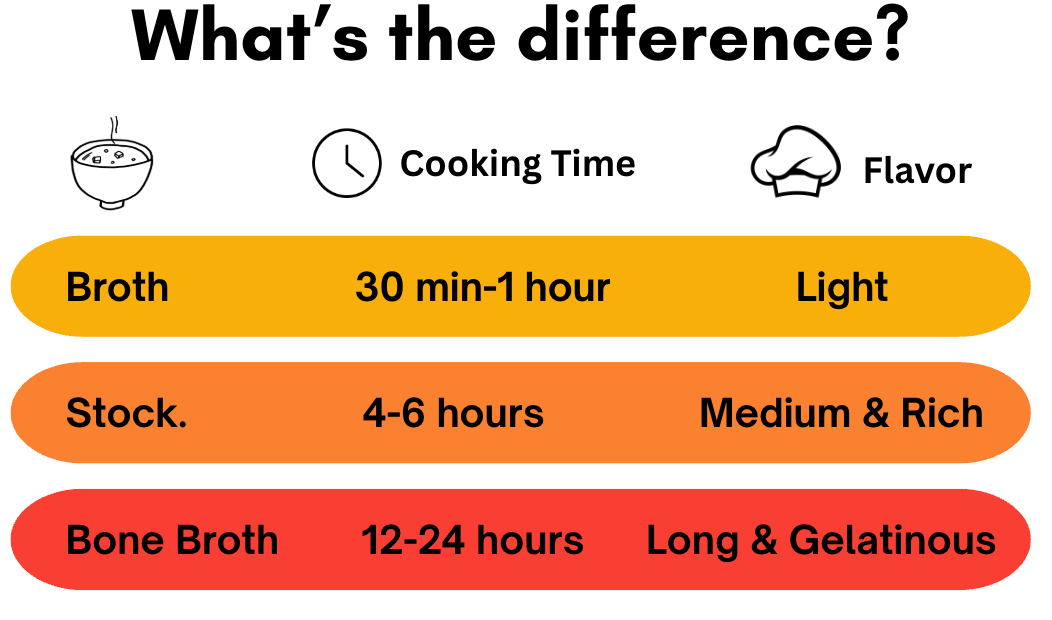
What’s the key difference between a regular broth or stock? Time. Bone broth takes its sweet time — often 12 to 24 hours. That’s what allows collagen in the bones to break down into gelatin. If your broth turns wobbly like Jell-O in the fridge, you know you’ve made the real thing.
Think of stocks and broths as siblings who share the same DNA but went off to live different lives:
Broth: Usually made from meat (sometimes with bones), simmered for an hour or two. Thin, light, great as a base for soups. And if seasoned with salt, great to sip on its own. Think consommé.
Stock: Made primarily from bones and some vegetables like onions, carrots, and celery, simmered 4–6 hours. Richer, more body, but still relatively quick to make. Salt is never added. It is meant to be an ingredient in a broader recipe.
Bone broth: Same cast of characters (bones, vegetables, water), but this is the marathon version, simmered for up to 24 hours. The result? A more concentrated flavor, thicker texture, and higher protein content from the collagen that’s extracted from the bones.
When buying bone broth, be skeptical if the label doesn’t guarantee long simmer times. If it’s truly rich in collagen, it will gel in the fridge. If it pours out like apple juice, you’ve been ripped off.

Got it. But why has it become so popular?
Bone broth got its wellness halo because it promises a lot: glowing skin, healed guts, pain-free joints, superhuman immunity. Some of these claims are loosely based on science; others are mostly wishful thinking.
Great Protein Source: One cup of bone broth has 8–10 g of protein compared to 2-3 g in regular broth. Not a steak dinner, but not nothing either.
Gut health: Bone broth contains glutamine and other amino acids tied to intestinal health. And a small study on mice showed bone broth had anti-inflammatory properties, and its consumption alleviated symptoms of ulcerative colitis. But whether that translates to humans has yet to be seen.
Joints: Mechanistically, collagen is needed for bone matrix maintenance and musculoskeletal health. And collagen is abundant in bone broth. The issue is that your body breaks down protein into amino acids, then decides how to use them. You can’t earmark your mug of broth to go straight to your knees.
The bottom line: bone broth is nourishing, but not magic. Can it be helpful? Sure. A cure-all? No.

Glad you brought up collagen! Why are there so many collagen supplements out there?
Collagen is the body’s scaffolding — it holds our skin, tendons, and cartilage together and upright. We lose it as we age, which is why many want to top up their supply.
Here’s the catch: when you eat collagen (whether from bone broth or supplements), your digestive system chops it into amino acids. Most get repurposed for general protein needs. A small fraction may stay intact as “bioactive peptides,” which can stimulate collagen-making cells—but this process is incredibly variable.
Expecting those amino acids to rebuild collagen is like assuming your tax dollars fund the programs you actually care about. If you’re lucky, a few do. But most get rerouted wherever the government (or your body) sees fit.
Clinical studies do show collagen supplements can help with skin elasticity and hydration. Bone broth? Research has shown that the amount of collagen it contains is inconsistent and much lower, so not a reliable substitute if you’re aiming for therapeutic effects.

So what’s better — bone broth or collagen gummies?
It depends on what you’re after.
Bone broth: Gives you hydration, warmth, and a modest protein boost. For those who struggle to take in enough, like older adults or those in chemotherapy, those extra grams of protein and fluid can be meaningful. But watch the sodium — some commercial versions pack nearly 20% of your daily limit in a single cup.
Collagen gummies/powder: These provide standardized, higher doses of collagen peptides. If you’re specifically targeting joint health or skin solutions, supplements are the more efficient route.
Bone broth works beautifully as part of a meal, a soup base, cooking liquid for grains, or just something soothing in a mug. A perfect example of how food can be both delicious and nourishing. Supplements are more of a functional add-on.

Bone broth is comforting, savory, and can provide extra protein and hydration. It’s not a cure-all, and its collagen content won’t rival supplements. But as part of a balanced diet, it’s a fine addition—especially if you enjoy making it yourself.
As you’ll see below, not all store-bought versions are created equal. Some deliver a solid protein boost, while others are surprisingly high in sodium. A glance at the label can tell you which is which.
No single food will make or break your health. What matters is the overall pattern: plenty of plants, enough protein, and consistency over time. Bone broth can fit into that pattern, but it doesn’t need to carry the weight of being a miracle drink.
If you like it, sip away. If not, you’re not missing the secret to eternal youth.

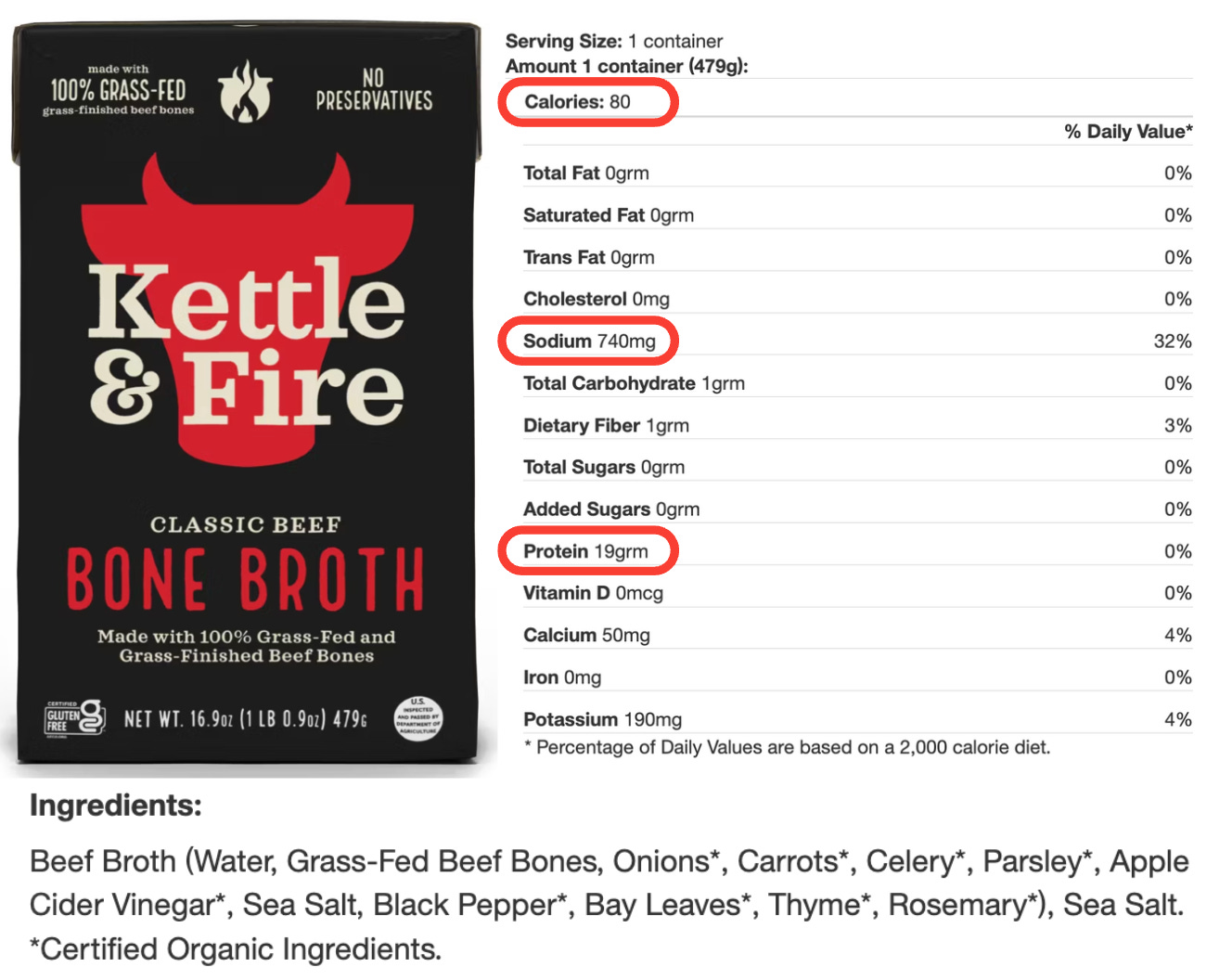
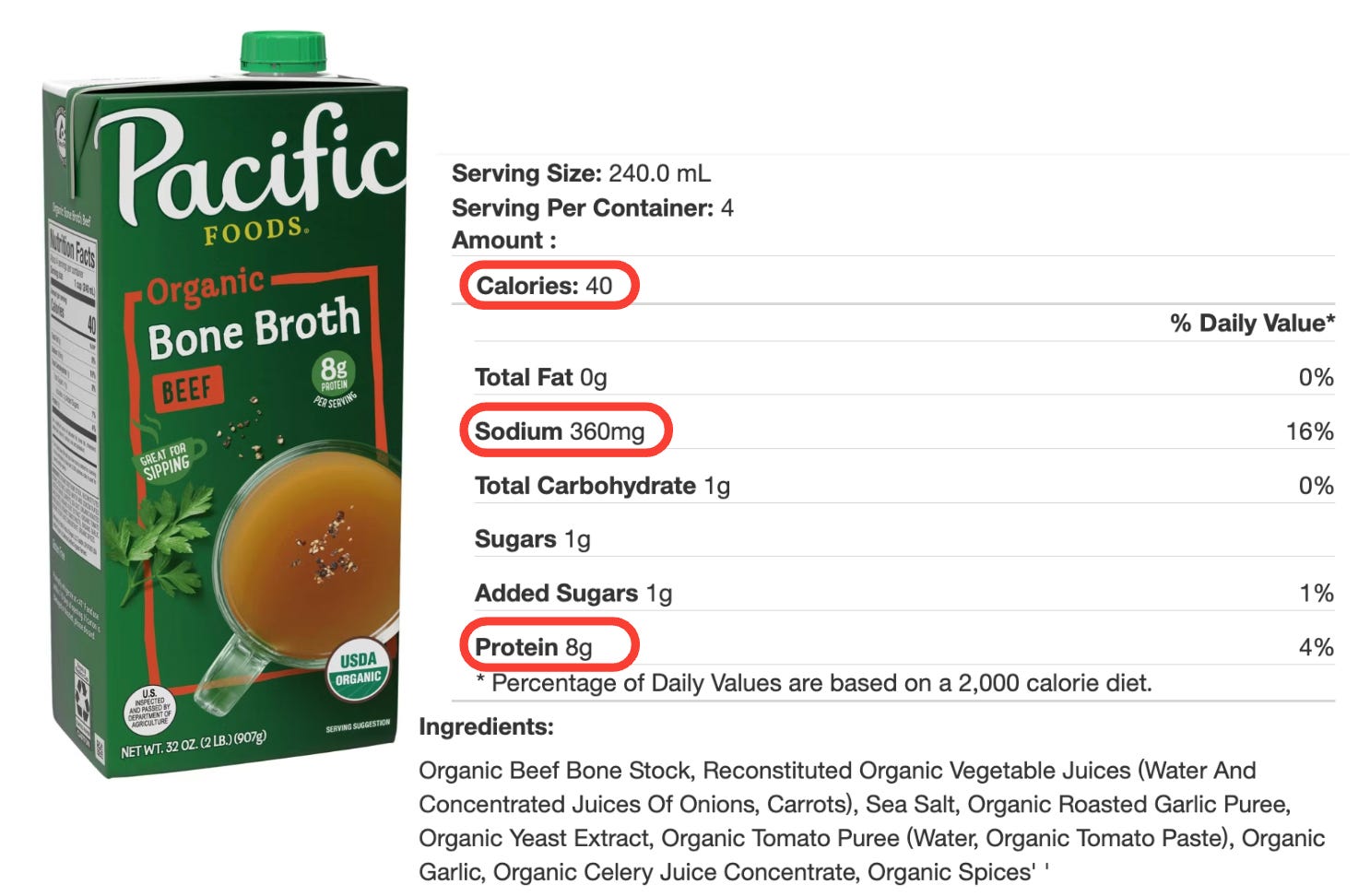
I picked out two common commercial brands of broth for comparison and looked at the calories, sodium, and protein content per serving. I wanted to compare bone broth to regular broth so that those who like to use them for soups and stews, to cook grains in, or to simply sip, can have a good side-by-side view. In my experience, other brands may vary a bit, but most fall within the range you see here.
Note: For reference, the American Heart Association recommends limiting sodium intake to about 2,300 mg per day. To stay within that, a full meal should land around 700 mg of sodium.
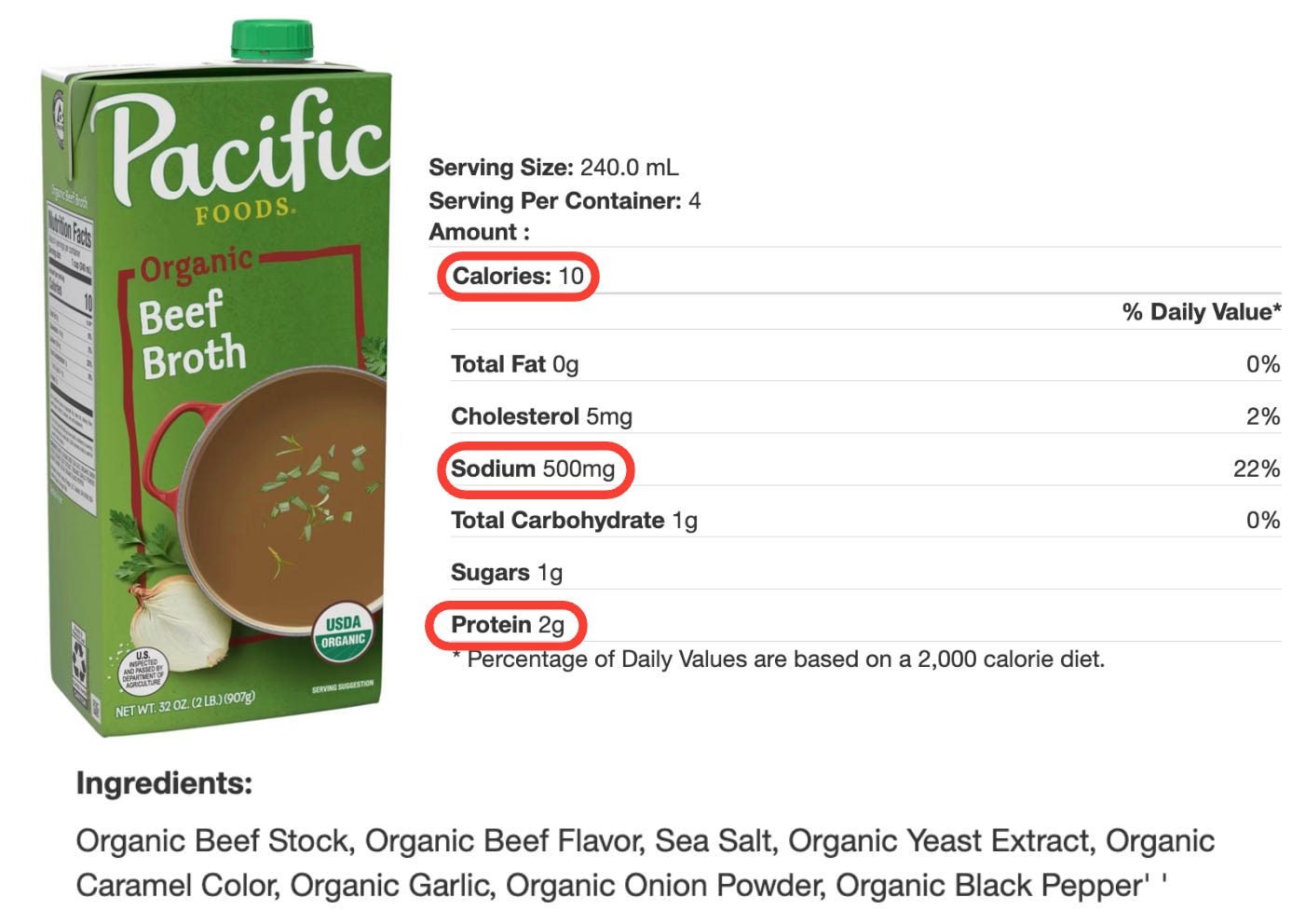
Beef Bone Broth vs Beef Broth
Make sure you’re comparing apples to apples when it comes to serving size. The Kettle & Fire Beef Bone Broth lists one container (16 ounces, or 2 cups) as a serving, while the Pacific Beef Bone Broth looks better at first glance but uses a smaller 8-ounce (1-cup) serving. The same goes for the Pacific Beef Broth. From a sodium standpoint, the bone broths come out ahead—and they also deliver more protein (about 9.5 grams per cup compared to just 2 grams in regular beef broth).
Chicken Bone Broth vs Chicken Broth
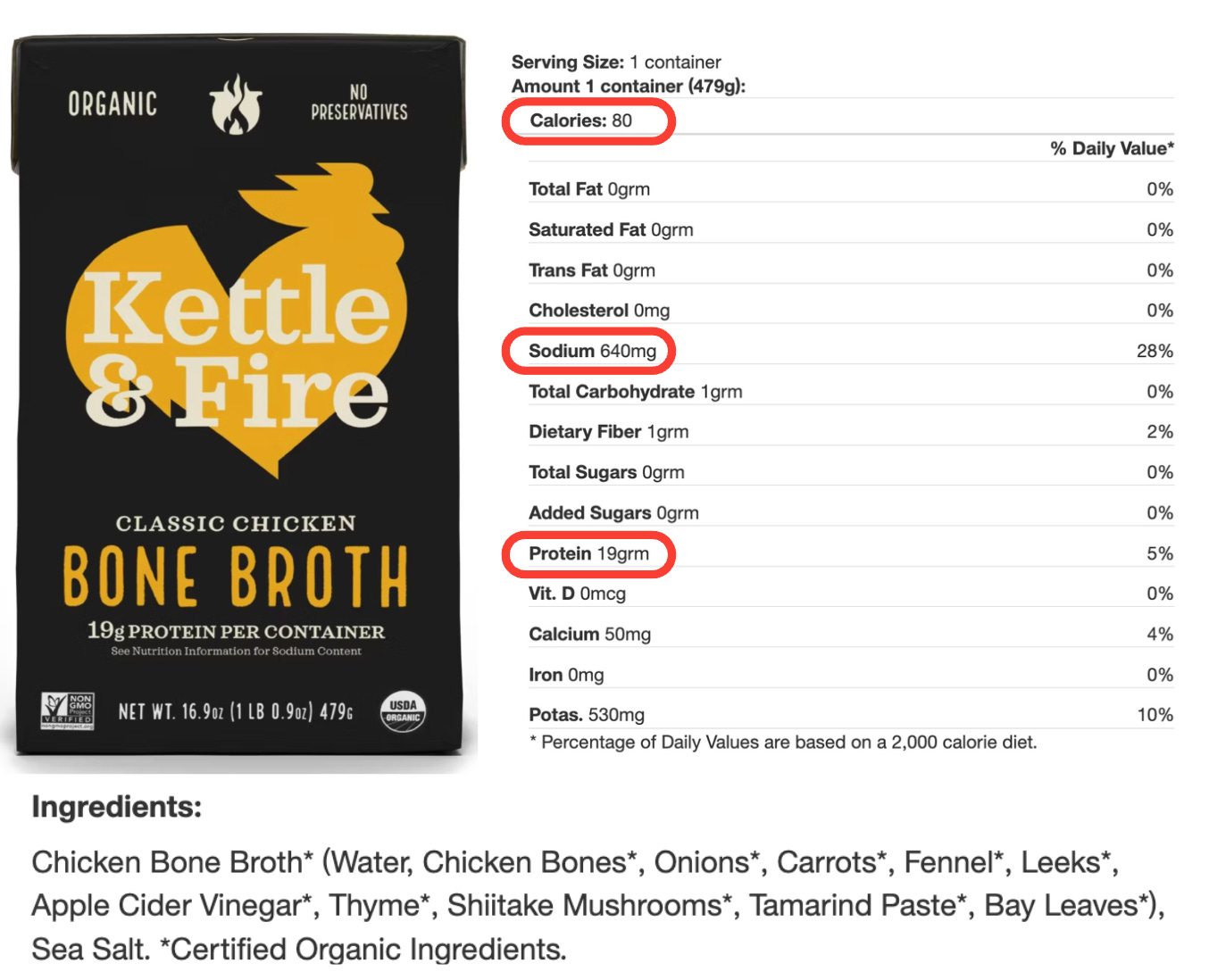
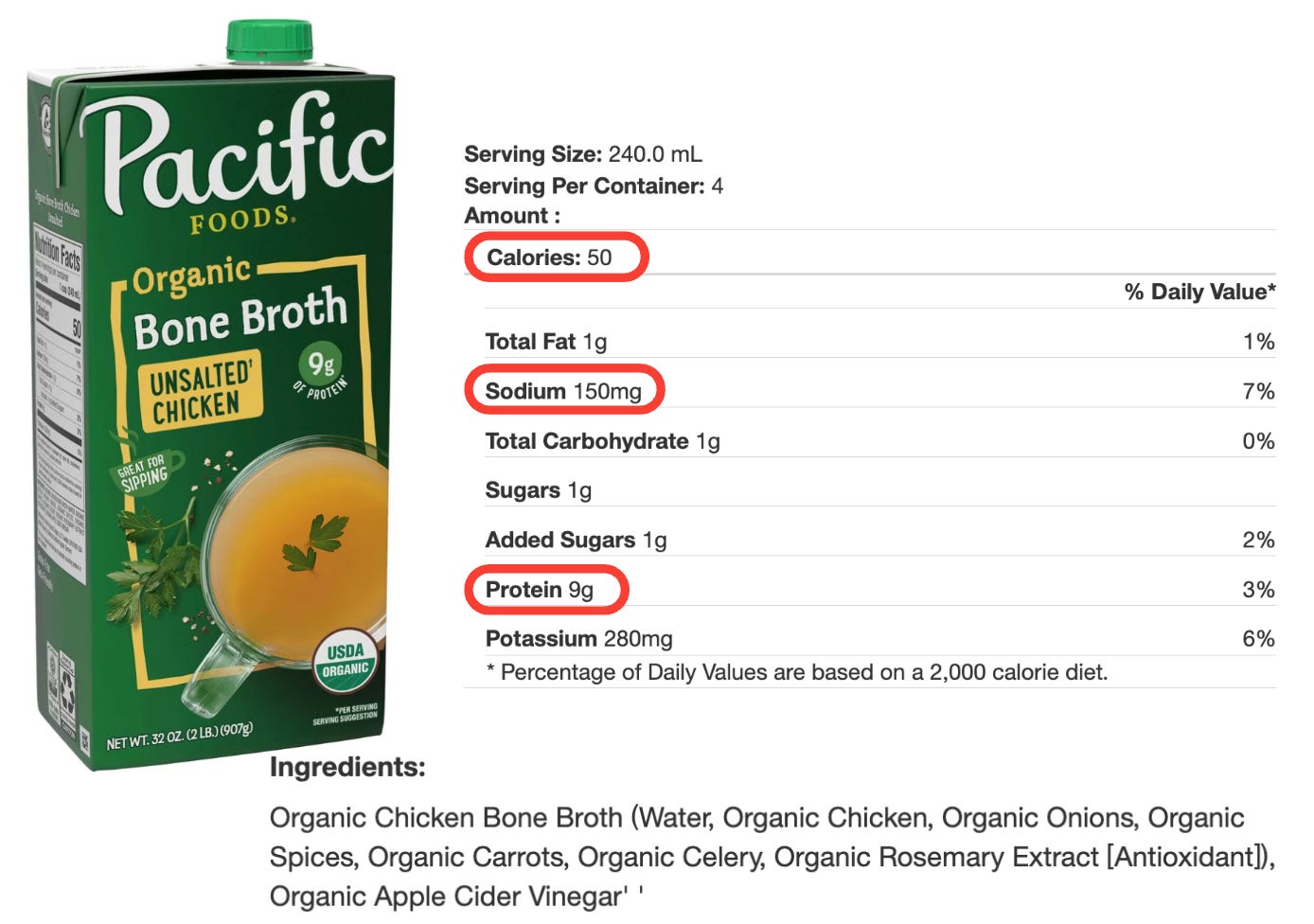
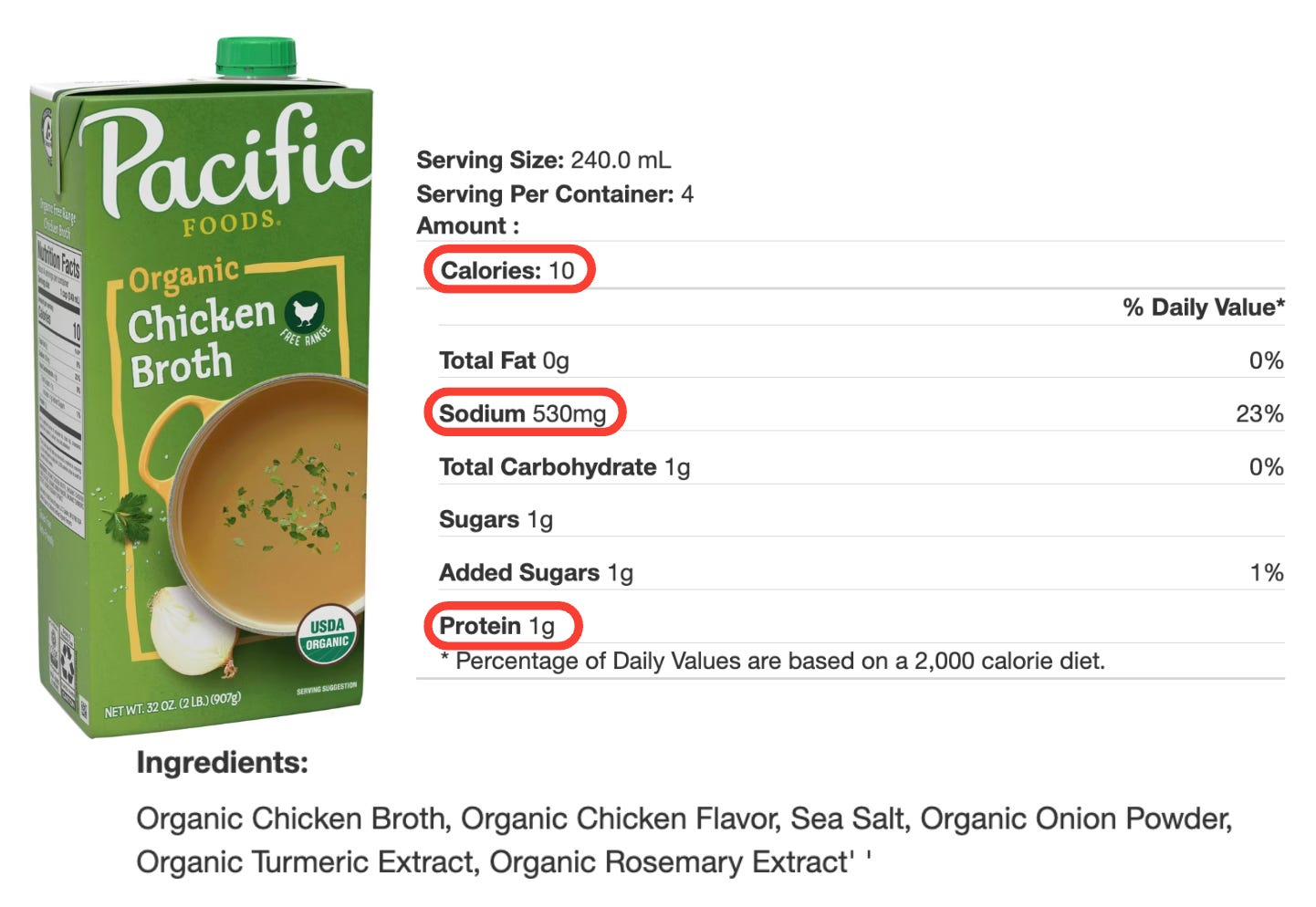
The Kettle & Fire Chicken Bone Broth is again high in sodium. I was able to find an unsalted variety of the Pacific, which comes in at a reasonable 150 mg per cup (or 300 mg for 2 cups). It’s a good reminder that choosing unsalted or low-sodium versions is the way to go.
Thank you so much for reading. Please consider hitting the heart 🤍 button below (it helps others find the post) &/or forward to a friend (or two, or three).
🗣 Got a question or comment? Leave it below so I can get back to you.
📩 Explore past newsletters and subscribe to new ones here on Substack.
Hi Lourdes! I had a few posts backed up and just getting to them. One strange discovery upon moving to France was the lack of canned (boxed) broth at the supermarket. Only bouillon cubes 😝 so I started saving chicken bones and making my own bone broth. The best trick I’ve found is doing it in the slow cooker; throw all the bones in add an onion halved some broken up carrots and cover with water. Then I put it on high for around 24 hours. Comes out amazing! And it means I don’t have to watch it or even stay home.
Love the slow cooker hack!